How Ecommerce Automation Can Save Sellers Hours Every Week
Running an ecommerce business involves much more than simply making sales. From processing orders and updating inventory to printing shipping labels and keeping customers informed, sellers can quickly find themselves spending hours every week on repetitive administrative tasks.
As order volumes increase and businesses begin selling across multiple marketplaces and sales channels, these small tasks can become increasingly difficult to manage manually. This is where ecommerce automation can make a real difference.
By automating repetitive processes, sellers can spend less time managing day to day operations and more time focusing on growing their business.
What Is Ecommerce Automation?
Ecommerce automation uses software to automatically complete routine tasks that would otherwise need to be handled manually.
Instead of checking several marketplaces for new orders, manually updating stock quantities or repeatedly entering the same information into different systems, automation allows these processes to happen in the background.
For multichannel sellers in particular, bringing these processes together can significantly simplify everyday order management.
1. Manage Orders From One Place
Selling across multiple channels can quickly become complicated. Checking Amazon, eBay, Shopify and other marketplaces individually for new orders takes time and makes it easier for orders to be missed.
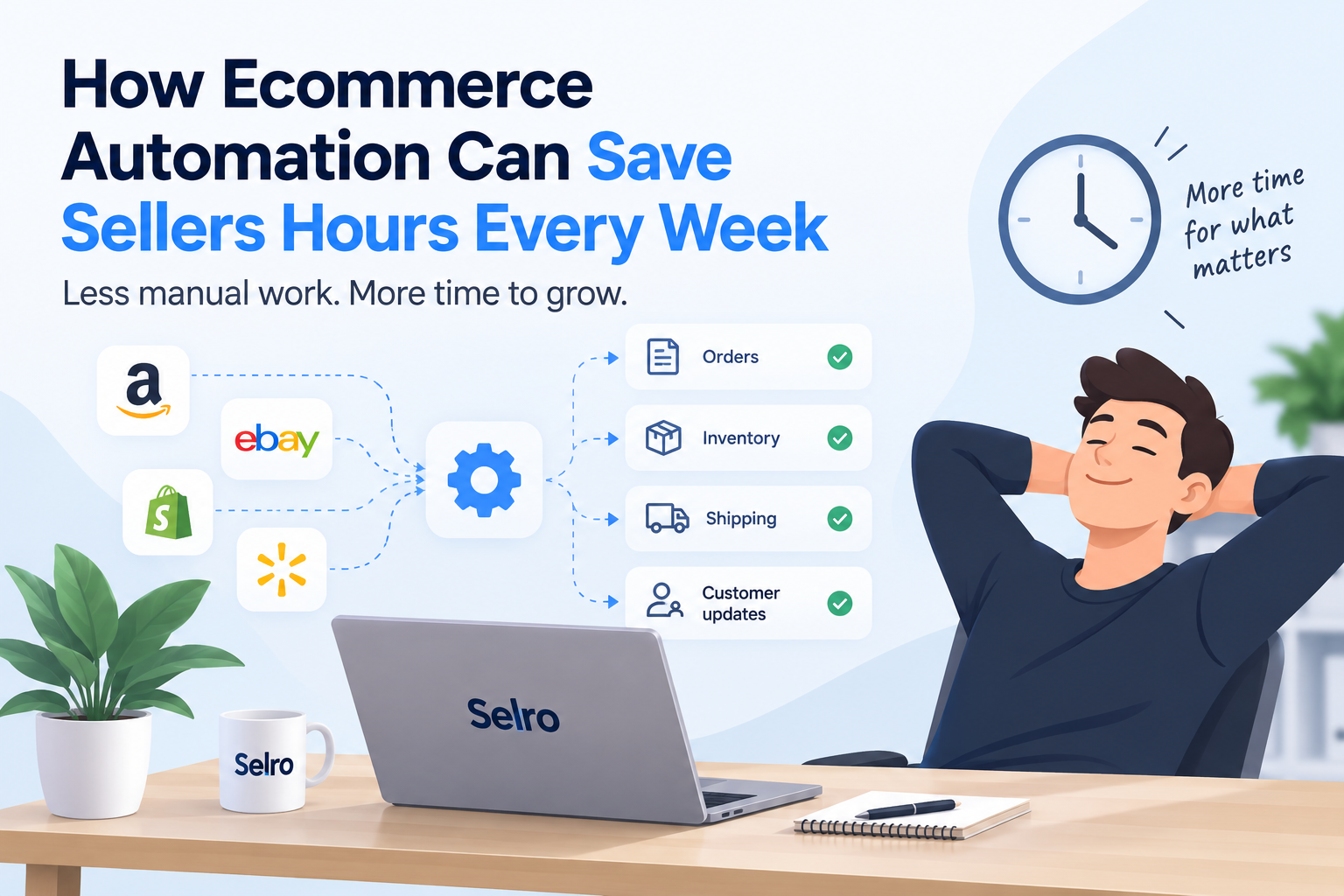
A multichannel order management platform such as Selro can bring orders from your connected sales channels into one centralised location.
This gives sellers a clearer view of their orders and reduces the need to constantly switch between different platforms throughout the day.
2. Keep Inventory Updated Automatically
Keeping stock levels accurate is one of the biggest challenges when selling across multiple channels.
Imagine you have ten units of a product available and that product is listed on several marketplaces. If a sale occurs on one channel but the stock quantity is not updated elsewhere quickly enough, you could accidentally sell inventory you no longer have.
Automated inventory management helps synchronise stock quantities across connected channels whenever orders are placed.
This reduces manual stock updates, helps prevent overselling and gives sellers a more accurate view of the inventory they have available.
3. Speed Up Shipping and Fulfilment
Packing and dispatching orders can become one of the most time consuming parts of ecommerce, particularly during busy periods.
Automation can help streamline the fulfilment process by reducing the number of manual steps required to get an order out of the door.
With your marketplaces and shipping carriers connected to one system, you can manage orders, generate shipping labels, update order statuses and send tracking information back to the relevant sales channel.
For businesses processing hundreds or thousands of orders, saving even a small amount of time on each order can add up to hours every week.
4. Reduce Repetitive Admin
Many ecommerce tasks are simple but repetitive.
Updating order statuses, copying customer details, entering tracking numbers and moving between different marketplace dashboards might only take a few minutes at a time, but those minutes quickly add up.
Automation allows sellers to create more efficient workflows and reduce the amount of manual data entry required.
There is another important benefit too: fewer manual processes can mean fewer opportunities for human error.
5. Stay Organised During Busy Periods
Automation becomes particularly valuable when order volumes suddenly increase.
Seasonal peaks, promotions and major shopping events can result in sellers receiving significantly more orders than usual. Processes that work perfectly well with 20 orders a day can quickly become difficult to manage when that number becomes 200.
Having automated processes already in place allows your ecommerce operation to scale more efficiently without every increase in sales creating the same increase in administrative work.
Spend Less Time Managing and More Time Growing
The biggest benefit of ecommerce automation is not simply completing tasks faster. It is giving sellers more time to focus on the areas of their business that require human input.
Instead of spending hours copying information between platforms or manually updating orders, that time can be spent developing new products, improving listings, finding new sales channels and delivering a better customer experience.
Selro helps ecommerce businesses bring their multichannel operations together, with tools for managing orders, inventory, shipping and fulfilment from one centralised platform.
By automating more of the everyday workload, sellers can build an ecommerce operation that is easier to manage and better prepared to grow.