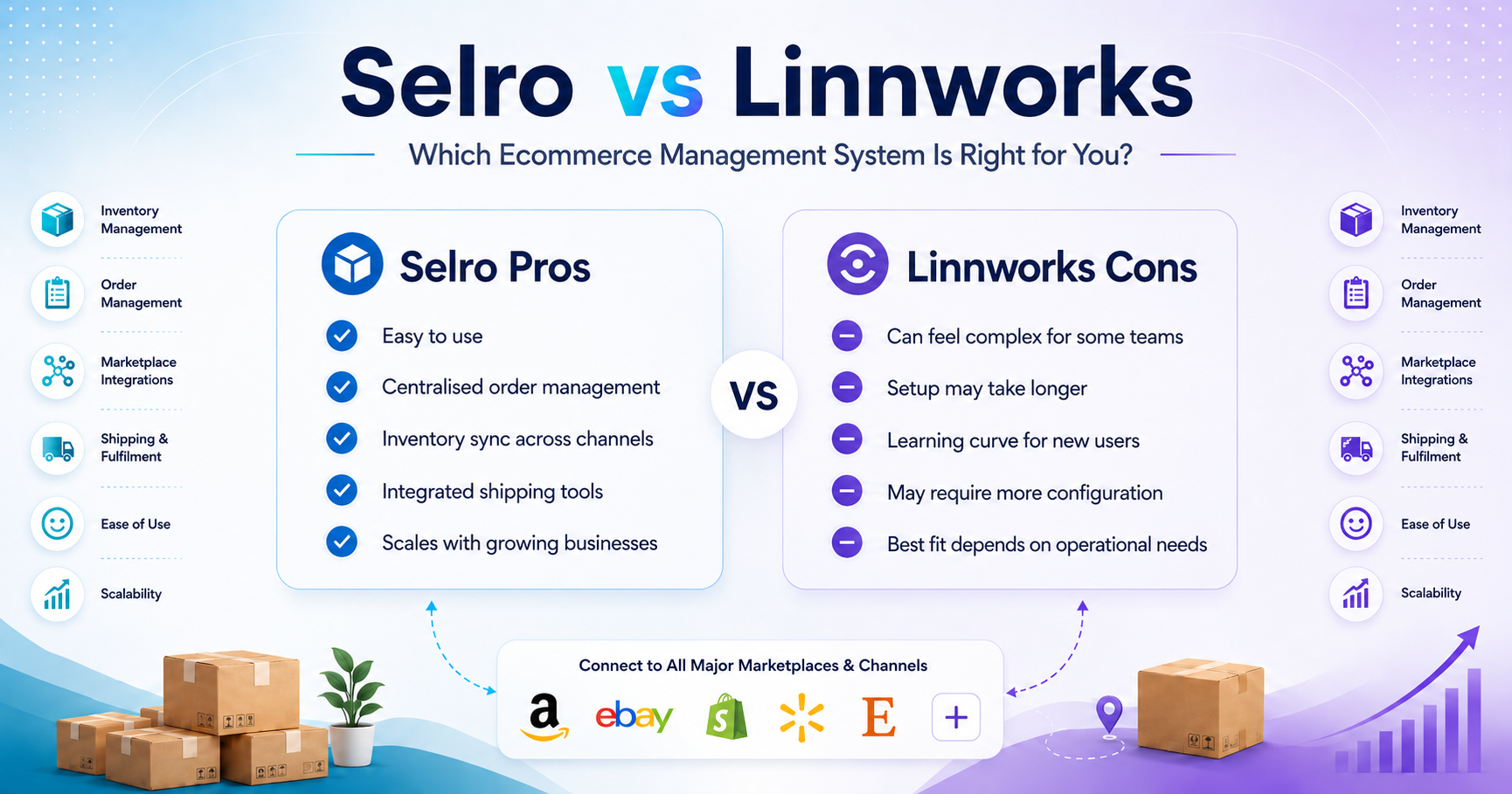
Selro vs Linnworks: Which Ecommerce Management System Is Right for You?
As ecommerce businesses grow, managing orders, inventory, listings, and shipping across multiple sales channels becomes increasingly complex. Whether you're selling on Amazon, eBay, Shopify, Etsy, TikTok Shop, or a combination of marketplaces, having the right software in place can help streamline operations and support growth.
wo solutions that sellers often evaluate are Selro and Linnworks. Both platforms are designed to help businesses manage multichannel ecommerce operations, but the right choice depends on your business model, operational requirements, and growth objectives.
In this article, we'll explore some of the key considerations when comparing ecommerce operations platforms and how businesses can determine which solution best meets their needs.
Why Ecommerce Businesses Need Multichannel Management Software
Selling across multiple channels creates opportunities for growth, but it also introduces operational challenges.
Common issues include:
- Keeping inventory accurate across all channels
- Managing orders from multiple marketplaces
- Avoiding overselling
- Updating product listings efficiently
- Handling shipping and fulfilment processes
- Accessing reliable business performance data
As order volumes increase, manual processes often become difficult to maintain. This is where ecommerce operations software can provide significant value.
Inventory Management
Inventory accuracy is one of the most important aspects of successful multichannel selling. Both Selro and Linnworks provide inventory management capabilities that help businesses maintain stock accuracy across connected sales channels.
When evaluating inventory management software, sellers should consider:
- Real-time stock synchronisation
- Multi-channel inventory visibility
- Bundle and kit management
- Multi-location inventory support
- Inventory forecasting capabilities
The right solution will depend on the complexity of your inventory operations and future growth plans.
Order Management
As businesses expand into multiple marketplaces, managing orders from a central location becomes increasingly important.
Modern order management systems help sellers:
- View orders from all channels in one dashboard
- Automate order processing workflows
- Reduce manual data entry
- Improve fulfilment efficiency
- Track order status more effectively
For many growing businesses, centralising order management can save significant administrative time while reducing the risk of operational errors.
Marketplace Integrations
The quality and breadth of marketplace integrations can have a significant impact on operational efficiency. Businesses should assess whether a platform supports the channels that are most important to them, both today and in the future.
Popular sales channels may include:
- Amazon
- eBay
- Shopify
- Etsy
- TikTok Shop
- Walmart Marketplace
- OnBuy
- Kaufland
- WooCommerce
Beyond the number of integrations available, it's important to evaluate how reliably data flows between systems and how easily new channels can be added.
Shipping and Fulfilment
Shipping is another critical component of ecommerce operations.
Integrated shipping functionality can help businesses:
- Generate shipping labels
- Automate courier selection
- Track shipments
- Manage fulfilment workflows
- Reduce manual processing time
Businesses with increasing order volumes often benefit from having shipping operations integrated into their ecommerce management platform rather than relying on multiple disconnected systems.
Ease of Use and Onboarding
When selecting ecommerce software, functionality is important, but usability should not be overlooked. A platform should be able to support business growth without creating unnecessary complexity for staff.
Questions worth considering include:
- How quickly can the platform be implemented?
- How much training is required?
- Is the interface intuitive for daily use?
- Can new team members learn the system easily?
For many businesses, achieving a balance between functionality and simplicity is an important factor in long-term success.
Scalability
The software requirements of a business often change as it grows.
A company processing a few hundred orders per month may have very different needs compared to one processing thousands of orders across multiple warehouses and international marketplaces.
When evaluating any ecommerce platform, it is useful to consider:
- Future sales channel expansion
- Increasing order volumes
- Additional warehouse locations
- Team growth
- International selling opportunities
Choosing software that can support future growth can help avoid costly migrations later.
Making the Right Choice
There is no one-size-fits-all solution when it comes to ecommerce operations software.
Every business has unique requirements based on its sales channels, product range, fulfilment processes, and growth ambitions.
Some businesses prioritise simplicity and ease of implementation, while others may require more specialised workflows and operational complexity.
The best approach is to identify your operational challenges, define your growth objectives, and evaluate which platform aligns most closely with those goals.
Final Thoughts
As ecommerce continues to evolve, having a reliable platform to manage inventory, orders, listings, and shipping is becoming increasingly important for businesses of all sizes.
Both Selro and Linnworks are established solutions within the ecommerce software market, helping sellers streamline operations and improve efficiency across multiple sales channels.
Ultimately, the right platform is the one that supports your business today while providing the flexibility to grow tomorrow.
If you're currently evaluating ecommerce operations software, consider creating a list of your essential requirements and comparing how each solution addresses your specific business needs. A structured evaluation process will help ensure you select a platform that supports both your current operations and future growth plans.